01 · Read · A life to discover
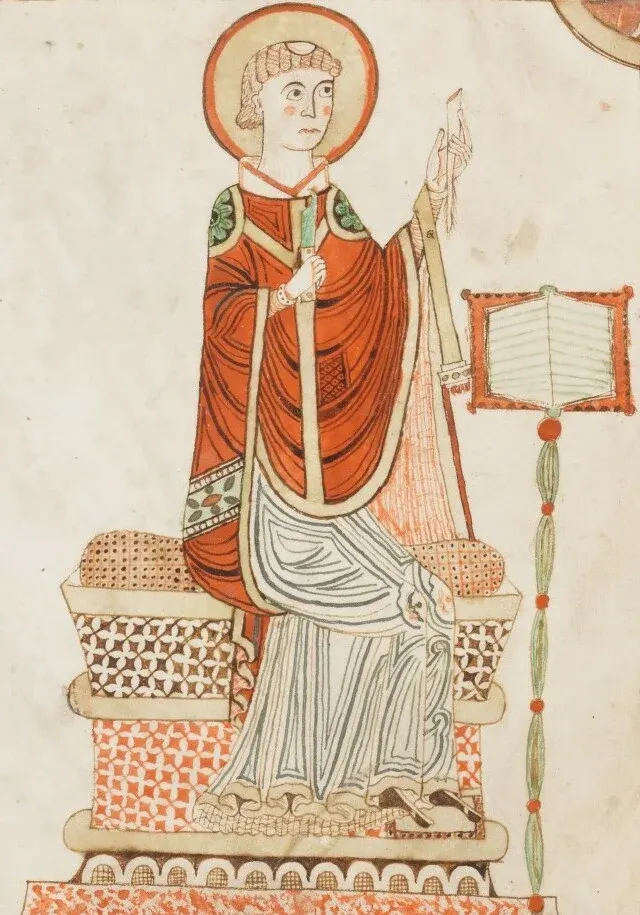
St. Bede the Venerable
Bede entered the care of the monastery of Wearmouth and Jarrow as a child and spent his life there in study, teaching, writing, and prayer. Ordained a priest at thirty, he drew on the monastery’s libraries to produce works of biblical interpretation, history, and the learning of his time.
Bede’s learning grew within a community whose books and teachers connected northern England with a much wider intellectual world. His teaching drew on classical authors as well as Christian writers. The monastery’s worship structured the same days in which he read, explained texts, and composed new works.
He wrote instructional material as well as major historical books. His concern with chronology and the date of Easter shows how religious practice stimulated technical study. He died in 735, leaving an unusually substantial written legacy for a monk who spent most of his life in one community.
His Ecclesiastical History of the English People, completed in 731, is an important source for early English Christianity and includes his own account of his life. His work on the calculation of Easter also influenced medieval learning. The title Venerable reflects his longstanding reputation; Leo XIII declared him a Doctor of the Church in 1899.
This saint is included on this recurring date in the U.S. Roman Rite calendar published by the USCCB. This reading guide gives U.S. calendar saints priority; the Mass celebrated on a particular year’s date can differ because of Sundays, seasons or higher-ranking celebrations.
Explore the biography & sources ↗