01 · Read · A life to discover
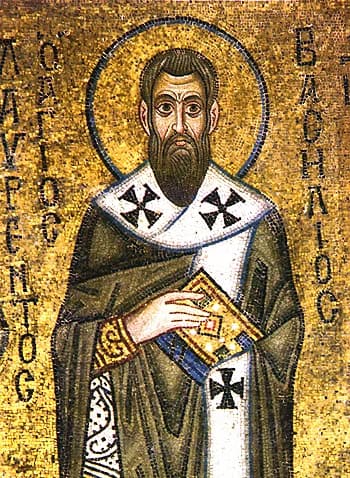
St. Basil the Great
Basil the Great was a fourth-century bishop of Caesarea in Cappadocia, a theologian, and an influential guide to communal religious life. His leadership joined intellectual work with practical assistance to the poor and the sick.
Raised in a Christian family, Basil studied in major centers of learning before turning toward a more explicitly ascetic life. His sister Macrina’s example helped shape that change. He encouraged communities whose prayer and shared discipline remained connected with the needs of the local Church.
As bishop from 370, he defended the divinity of the Son and the Holy Spirit and worked to heal divisions among Christians. His writings also guided monastic life. Schools, hospitals, and the charitable institutions associated with his name made service a visible expression of the faith he taught.
Basil died in 379. His influence continues in Eastern Christian prayer and religious life, while Western monastic tradition also drew on his teaching. He is distinct from his father, Basil the Elder. The Roman calendar remembers him with Gregory of Nazianzus on January 2. His legacy cannot be understood through theology or charity alone: his life deliberately connected them.
This saint is included on this recurring date in the U.S. Roman Rite calendar published by the USCCB. This reading guide gives U.S. calendar saints priority; the Mass celebrated on a particular year’s date can differ because of Sundays, seasons or higher-ranking celebrations.
Explore the biography & sources ↗