Saints did not necessarily live flawless earthly lives. Catholic holiness includes repentance, growth, and a faithful response to God's grace. That is different from saying their mistakes were good or that every opinion they expressed deserves our agreement.
There is also a distinction between a saint's earthly journey and life in heaven. The Catechism, paragraphs 1023–1024, describes those in heaven as purified and united with God. When we ask whether saints were imperfect, we are usually asking about their lives before death.
That question matters when a biography surprises us, when we choose a Confirmation saint, or when our own repeated failures make holiness seem out of reach.
What does the Church mean by holiness?
The Catechism, paragraphs 2013–2015, connects holiness with growing in love and union with Christ. It teaches that Christians in every walk of life are called to this growth, drawing strength from Christ and serving their neighbors. Extraordinary spiritual experiences are not given to everyone.
A useful distinction is between moral growth and the pressure to appear faultless. Someone may look composed while refusing to admit wrongdoing. Another person may struggle visibly yet begin to tell the truth, accept correction, and make amends. An attractive public image cannot tell the whole story.
For your own reflection, replace the question of whether you look saintly with something concrete: Are you becoming more honest with the people affected by your choices? Where could you accept help? These are original reflection prompts, not a test that measures anyone's sanctity.
Does canonization approve everything a saint did?
No. In Gaudete et exsultate, paragraph 22, Pope Francis explicitly acknowledges mistakes and failures in saints' lives. He directs readers toward the whole course of their growth in holiness rather than assuming each statement and action was perfect.
The Catechism, paragraph 828, presents canonized saints as models and intercessors and points to their fidelity to grace. Read together, these teachings give us a way to honor a saint without treating every personal judgment as Church teaching.
That distinction helps when discussing a difficult passage. You can ask what the author meant, what evidence supports a claim, and whether an action actually reflects the virtue you hope to imitate. Respect does not require an evasive answer. Naming a wrong honestly is compatible with recognizing a person's conversion and goodness.
Avoid the opposite shortcut, too: finding a failure does not make everything else in a life meaningless. A careful reader gives both admirable actions and serious problems their proper weight.
What can Saint Augustine teach us about changing?
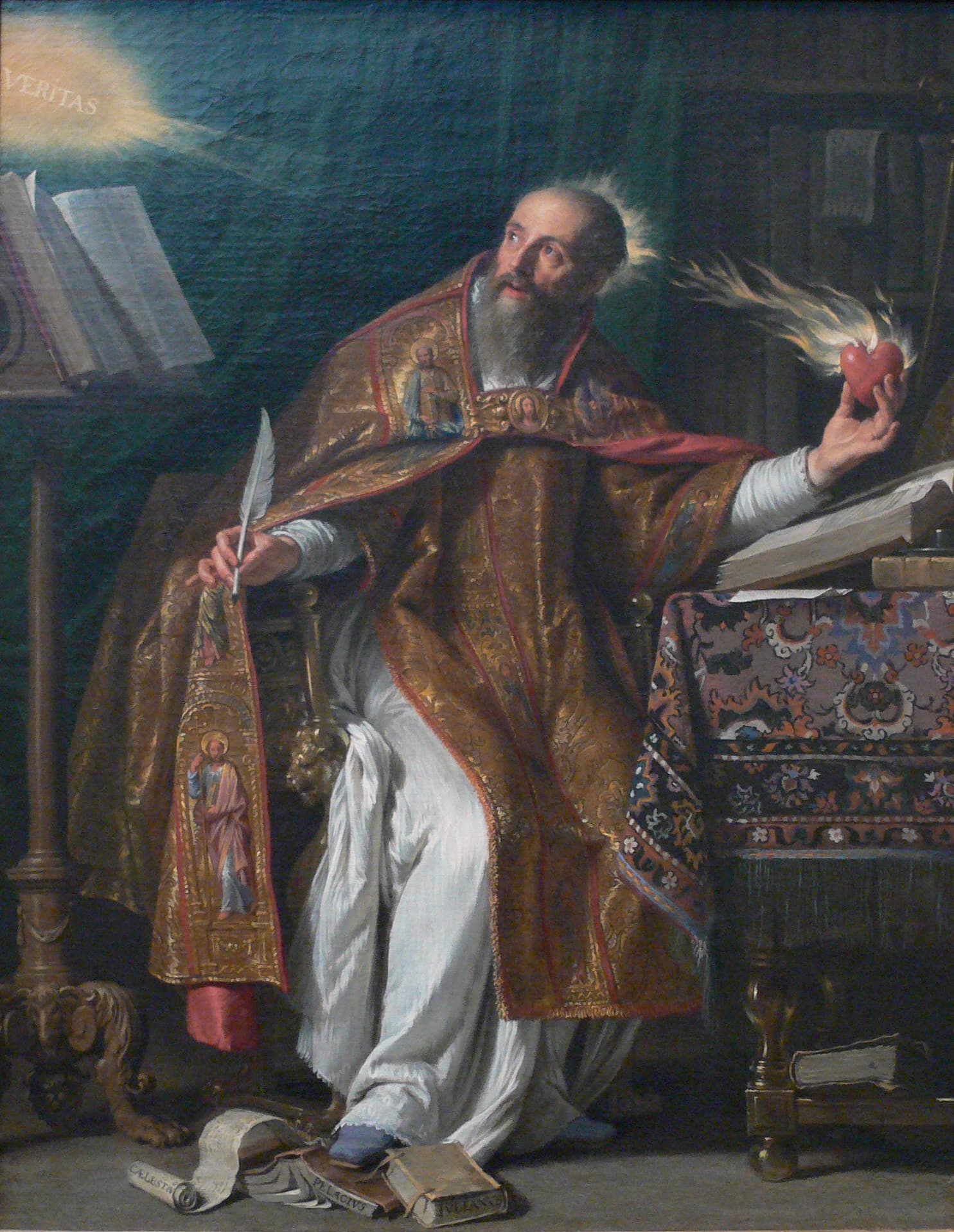
Saint Augustine of Hippo offers a particularly helpful example because his reflections on conversion are part of his own writings. His Confessions looks back on his journey toward God.
In his February 27, 2008 audience on Augustine, Benedict XVI explains that Augustine's conversion continued after his baptism in 387. Later, pastoral responsibilities challenged his preference for study and contemplation. He also came to recognize his continuing need for forgiveness and renewal.
The practical lesson is not that a dramatic turning point will solve every difficulty. Consider the commitments that follow a fresh start: an apology may need changed behavior; a return to prayer may need a realistic habit; a promise to serve may require making time for someone inconvenient.
When reading Augustine, pause over one passage instead of racing to assemble an impressive collection of quotations. Ask what changes in his understanding and what responsibility follows. Let the biography introduce the longer work rather than stand in for it.
How should we handle troubling stories about saints?
Begin by identifying the kind of claim you have encountered. A saint's own letter, a later biography, a devotional legend, and an unattributed social-media quotation need different kinds of checking. As a reading practice, record where a story comes from before deciding what it proves.
If an account calls something a tradition, retain that qualification when you retell it. If a quotation has no identifiable work or passage, do not build your argument around it. Uncertainty is a reason to investigate, not an invitation to fill in a pleasing detail.
Historical context can help explain a decision, but explanation does not automatically justify it. Keep the people harmed by an action in view. If a story raises a difficult theological question, bring the actual passage and its source to a knowledgeable priest or catechist.
What does this mean when choosing a Confirmation saint?
You do not need to find someone whose temperament and life circumstances match yours exactly. Try choosing a virtue you want to grow in, then read how a saint practiced it through real responsibilities.
For a discussion with your sponsor, choose one sourced episode and explain what you admire. Name something you do not yet understand. Then propose one modest way to practice the virtue this week. These original discussion prompts can supplement your parish's requirements.
For example, a student interested in courage could practice telling the truth about unfinished work. Someone drawn to generosity could keep a commitment to help at home. Neither action needs an audience.
Afterward, revisit what happened. Did you follow through? If you failed, what needs repair? Our guide to preparing for Confession after a long time away can help with a concrete return to the sacrament.
A saint's story can make room for honest examination and hope at the same time. Begin with a real life, read its sources carefully, and carry one worthwhile question into your own responsibilities.
Artwork and source
The cover is Philippe de Champaigne's Saint Augustine, about 1645–1650, in the Los Angeles County Museum of Art. The faithful photographic reproduction is identified as public domain on its Wikimedia Commons file page. It is a later devotional painting, not a contemporary portrait of Augustine.
