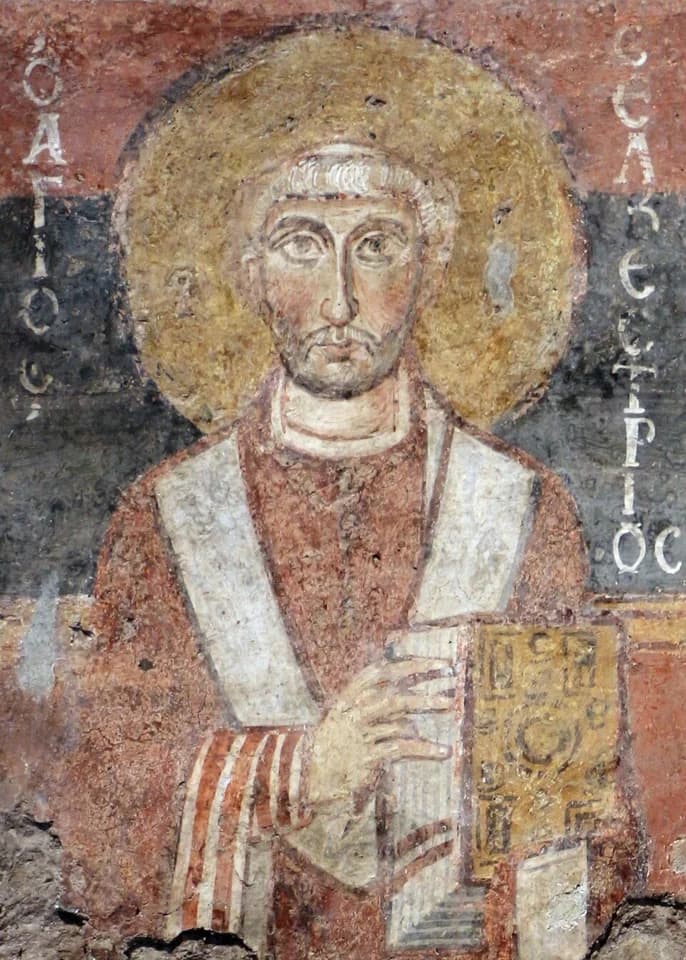
01 · Read · A life to discover
St. Sylvester I
Sylvester I led the Church of Rome during the transformation that followed Constantine’s recognition of Christianity. His pontificate coincided with the construction of major Roman basilicas and the Council of Nicaea, which addressed the controversy over the divinity of Christ.
Elected in 314, he served as Christian worship acquired a new public setting. Major churches associated with Constantine, including the Lateran and Saint Peter’s, changed the religious landscape of Rome. These foundations gave the city’s Christian community buildings and visibility unlike those available during persecution.
The period also demanded clarity about Christian belief, most famously at Nicaea in 325. Sylvester’s memory belongs to this wider transition from a persecuted church to one entangled with imperial patronage. His veneration as a confessor emphasizes faithful service in that changed environment rather than death by execution.
The details of Sylvester’s personal involvement in the period’s major negotiations are uncertain. His biography should therefore distinguish the events of his pontificate from claims that he personally directed each one. He was honored as a confessor rather than a martyr. His December 31 commemoration remembers a bishop serving as the Church entered a dramatically changed public situation.
This saint is included on this recurring date in the U.S. Roman Rite calendar published by the USCCB. This reading guide gives U.S. calendar saints priority; the Mass celebrated on a particular year’s date can differ because of Sundays, seasons or higher-ranking celebrations.
Explore the biography & sources ↗