01 · Read · A life to discover
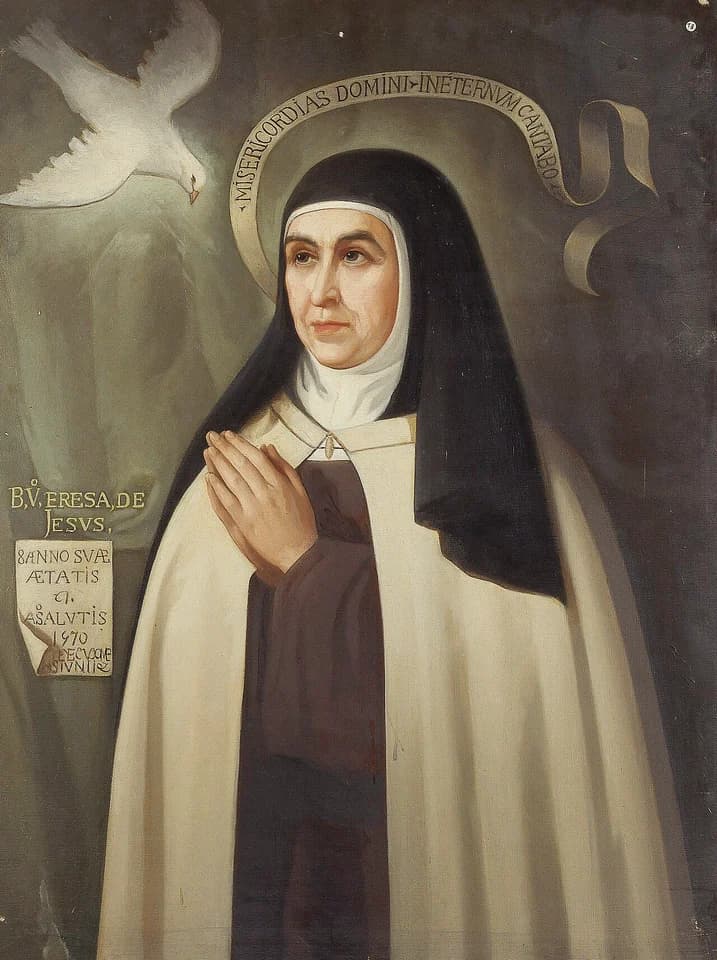
St. Teresa of Ávila
Teresa of Ávila (1515–1582), also known as Teresa of Jesus, was a Spanish Carmelite nun, founder, and teacher of prayer. Her books grew out of religious life rather than a university career. They address people who need help praying, living together, and recognizing whether spiritual enthusiasm is producing love.
Teresa entered Carmel at twenty. Serious illness and years of inner struggle preceded the deepening of her commitment to prayer. In 1562 she founded Saint Joseph’s in Ávila, beginning a reform centered on small communities, poverty, and recollection. John of the Cross became a collaborator in the reform of the friars. Founding communities involved travel, opposition, and practical decisions about resources as well as contemplation.
Her books serve different purposes. The Life recounts her experience and discernment. The Way of Perfection offers counsel to her sisters, including reflection on the Lord’s Prayer. The Interior Castle uses the image of a castle with successive dwellings to describe growth in relationship with God. The Foundations records the establishment of communities. Knowing which kind of book one is reading helps: autobiography, advice, and symbolic spiritual teaching are not interchangeable.
Pope Francis’s 2021 reflection on Teresa connects her prayer with her creative, demanding work as a reformer. He emphasizes that her extraordinary experiences are not a program every Christian must reproduce. The lasting question is whether prayer leads to charity. Teresa’s example of caring for a sick sister makes that test practical: interrupting a chosen devotion to meet another person’s need can itself express fidelity to God. A reader need not seek visions or unusual feelings to take her teaching seriously.
On September 27, 1970, Paul VI proclaimed Teresa a Doctor of the Church. His homily recognizes her as a teacher whose spiritual wisdom serves the wider Church. The declaration did not claim that she invented a new faith; it drew attention to her capacity to communicate Christian prayer and life. She had been canonized in 1622. Her importance as a woman teaching from lived religious experience is part of that public recognition.
Teresa’s legacy can therefore be approached through both her books and the communities she founded. Reading only accounts of mystical experiences misses the responsibilities surrounding them. Reading only her achievements misses the prayer that sustained them. Her work keeps those dimensions together and gives readers concrete questions about humility, friendship, perseverance, and service.
This saint is included on this recurring date in the U.S. Roman Rite calendar published by the USCCB. This reading guide gives U.S. calendar saints priority; the Mass celebrated on a particular year’s date can differ because of Sundays, seasons or higher-ranking celebrations.
Explore the biography & sources ↗