01 · Read · A life to discover
St. Edward the Confessor
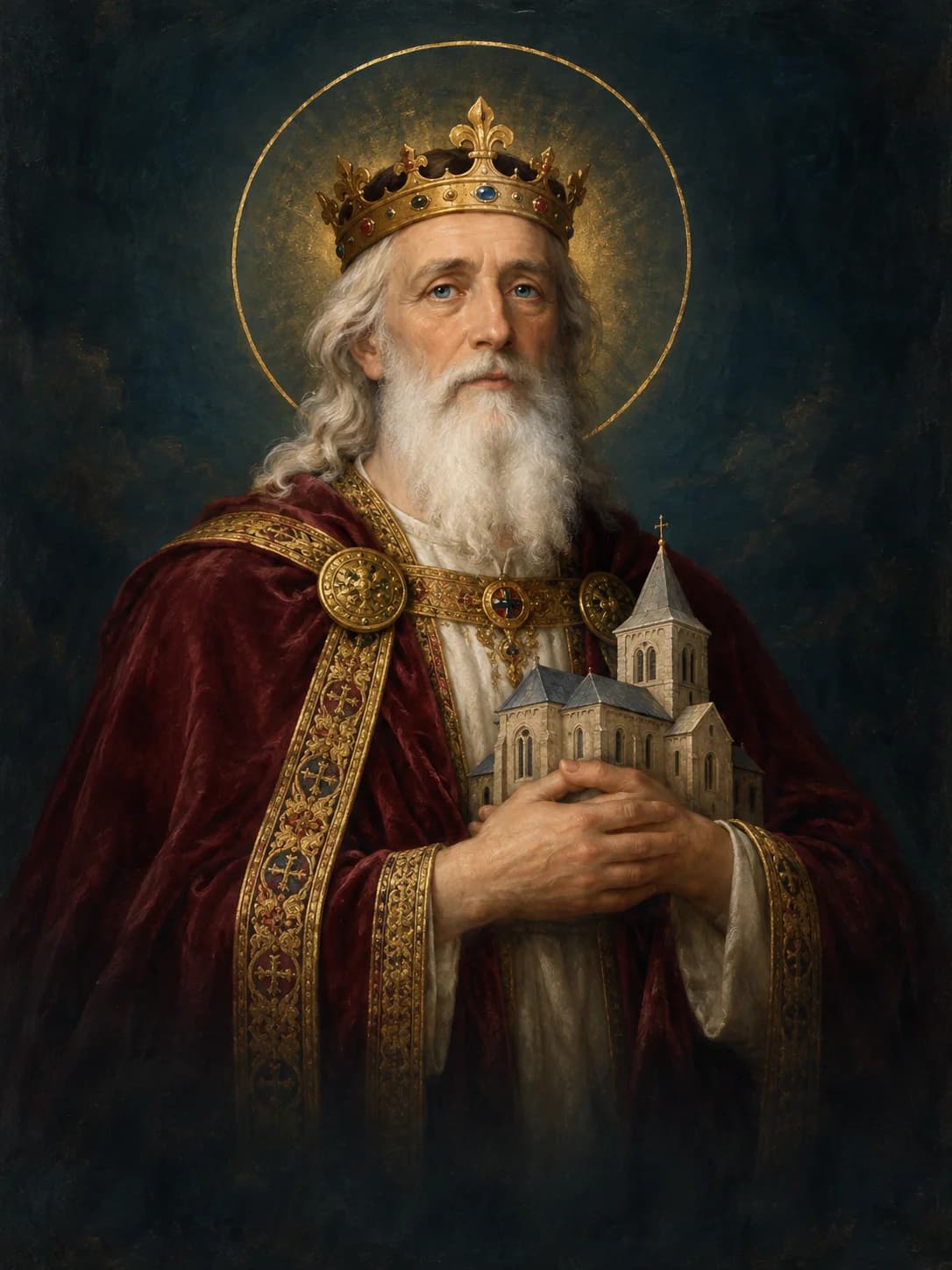
Edward the Confessor ruled England from 1042 until his death in January 1066. His religious legacy is especially visible at Westminster Abbey, which he rebuilt and where his shrine remains central to the church's history.
Exile in Normandy shaped much of his early life. After returning to England and becoming king, he had to negotiate with powerful noble families. His marriage to Edith, daughter of Earl Godwin, linked him to one of the most influential households in the kingdom.
Edward's Westminster church was dedicated on December 28, 1065, when illness prevented him from attending. He died days later and was buried there. Edith commissioned a Life that helped preserve his memory; accounts of his reign must distinguish this commemorative purpose from an impartial political assessment.
Canonized in 1161, Edward acquired a rich body of miracle traditions, including the story of a ring given to a beggar identified as John the Evangelist. His remains were transferred to a shrine on October 13, 1163, the date of his principal observance. The title Confessor distinguishes his witness from martyrdom, while the later shrine connects royal devotion, pilgrimage, and Westminster's architectural history.
October 13 marks the translation of his relics; death anniversary January 5.
Explore the biography & sources ↗