01 · Read · A life to discover
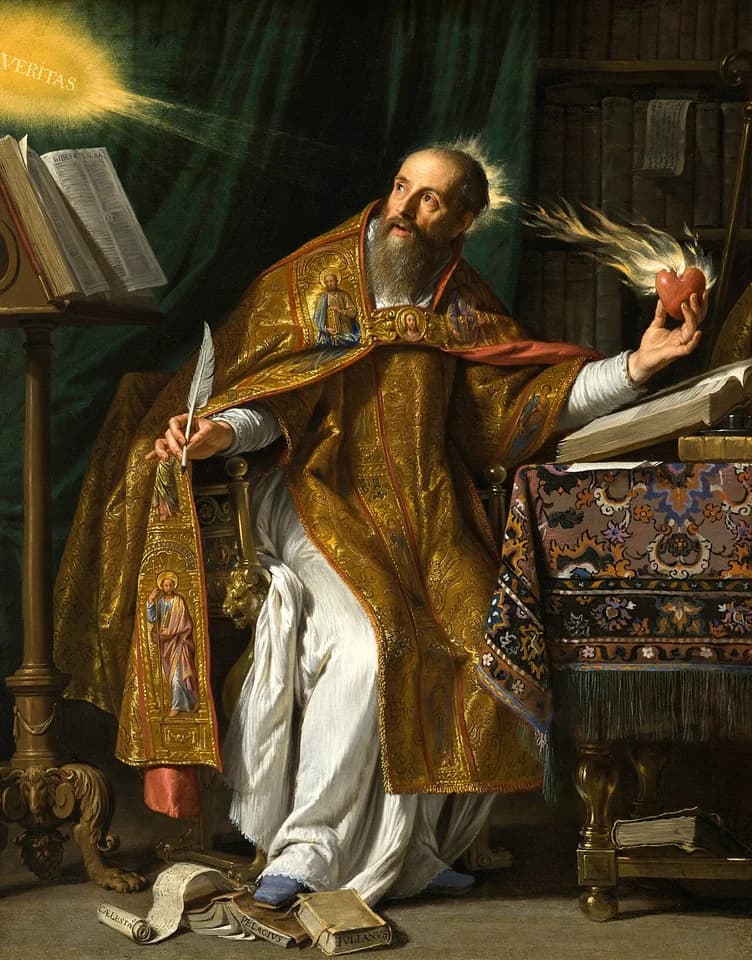
St. Augustine of Hippo
Augustine of Hippo (354–430) was a North African bishop, preacher, and author. His life is often remembered for a dramatic conversion, but his decades of pastoral work also belong to the story. He addressed questions about freedom, grace, Scripture, and belonging to the Church while caring for a community in Roman Africa.
Born at Thagaste, Augustine learned Christianity from his mother Monica. As a young man in Carthage, he pursued rhetoric, became the father of Adeodatus, and searched for wisdom through Cicero and the Manichaean movement. His teaching career eventually brought him to Milan. There, Ambrose’s preaching helped him reconsider biblical texts he had dismissed. After his conversion in 386, he received baptism in 387. Monica died at Ostia as they prepared to return to Africa. Augustine became a priest at Hippo in 391 and a bishop in 395; preaching, care for poor people, and the formation of clergy became continuing responsibilities.
The Confessions, written around 397–400, is more than a chronological account of those events. Across its thirteen books, Augustine addresses God, examining his failures while giving thanks for mercy. Its later books consider memory, time, and creation. Another work, the Retractations, revisits his earlier writings and identifies corrections or qualifications. Read together, these works show an author willing to examine both his life and his arguments. They invite slower reading than a collection of inspirational sayings: the questions and context are part of what he is trying to communicate.
Augustine remained a pastor amid political insecurity and war. In 426 he designated Heraclius as his successor, hoping to devote more time to Scripture. Yet responsibilities continued. During the invasion of North Africa, he encouraged reconciliation and considered whether clergy could leave endangered communities. In his counsel to Honoratus, he insisted that pastors should not abandon people who still needed their ministry when both faced the same danger. Hippo sheltered refugees, including other bishops, during the siege of 430. His biographer Possidius describes Augustine praying penitential psalms during his final illness. He died on August 28 that year. This ending gives his legacy a concrete setting: his reflections on faith were inseparable from the needs of people around him.
This saint is included on this recurring date in the U.S. Roman Rite calendar published by the USCCB. This reading guide gives U.S. calendar saints priority; the Mass celebrated on a particular year’s date can differ because of Sundays, seasons or higher-ranking celebrations.
Explore the biography & sources ↗