01 · Read · A life to discover
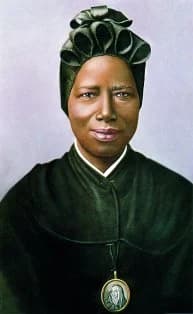
St. Josephine Bakhita
Josephine Bakhita was born in Darfur and abducted into slavery as a child. Repeated sales and severe abuse separated her from her family and even from memory of her original name. Taken eventually to Italy, she encountered Christianity through the Canossian sisters. When her former employers wanted her to leave, she asserted her wish to remain, and her freedom was legally recognized in 1889.
Her encounter with the Canossians began while she was responsible for a child temporarily placed in their care. Becoming Christian and becoming a religious sister were decisions made after years in which others had denied her the ability to choose. That sequence matters: her vocation should not be narrated as a justification of enslavement.
Baptized in Venice in 1890, she entered the Canossians and spent much of her religious life at Schio, working in ordinary community duties and welcoming visitors. Her testimony preserved a survivor's account of slavery. She died in 1947; her remembrance connects Christian dignity, patient service, and the rejection of treating people as property.
Much of her later influence arose through personal contact rather than public office. Domestic work and welcoming people gave others access to a woman whose testimony challenged the assumption that a person could be owned. Her original family name and exact early chronology cannot be reconstructed with the certainty available for her Italian religious life.
This saint is included on this recurring date in the U.S. Roman Rite calendar published by the USCCB. This reading guide gives U.S. calendar saints priority; the Mass celebrated on a particular year’s date can differ because of Sundays, seasons or higher-ranking celebrations.
Explore the biography & sources ↗