02 · Reflect
A question to sit with
What keeps your attention scattered? Consider what a few quiet minutes might allow you to bring honestly before God.
What detail in St. Leo the Great’s story invites you to think differently about your own day?
Choose your language
Automatic translation by Google. Wording may be imperfect. Email forms stay on the English site.
Opens this public page in Google Translate. About translation ↗
A little time for faith, every day
Read a life. Make space for prayer. Carry one good thing into your day.
November 10From the feast-day calendar
01 · Read · A life to discover
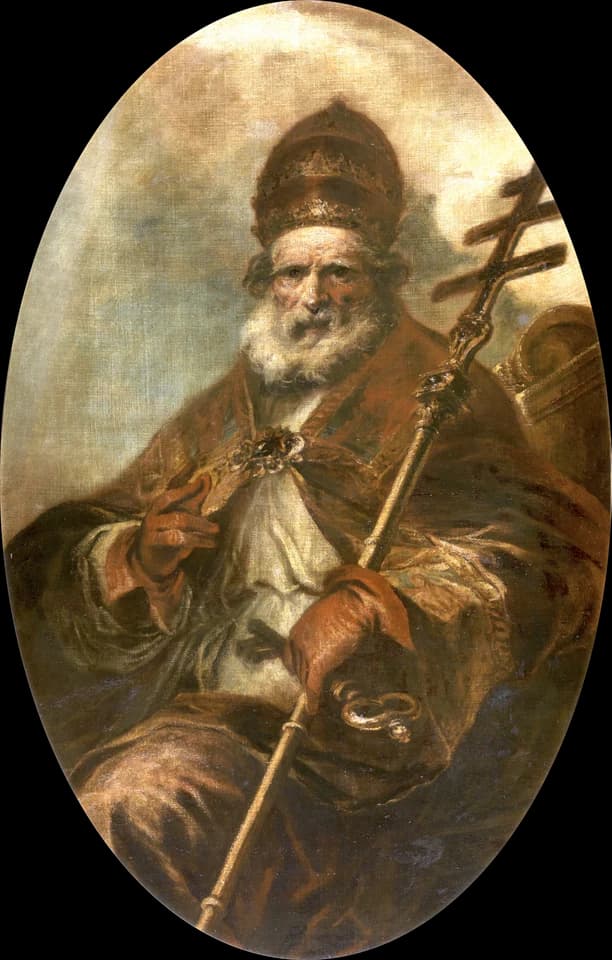
Leo became bishop of Rome in 440 after serving as a deacon and undertaking diplomatic work. His pontificate coincided with weakening imperial government, warfare, and intense theological controversy. Through sermons, letters, and practical leadership he strengthened the Roman see and urged Christians to connect their worship with charity and moral responsibility.
He was away on a diplomatic mission in Gaul when his election was announced. Returning to Rome, he took office in September 440. The combination of church leadership and public negotiation was intensified by the empire's weakening capacity to protect the city and manage its crises.
His teaching on Christ's full divinity and humanity strongly influenced the Council of Chalcedon in 451. He also joined negotiations with Attila in 452 and confronted the crisis of the Vandal sack of Rome in 455. These episodes should not obscure his surviving pastoral writings, which provide the clearest evidence of his work. He died in 461 and is honored as a Doctor of the Church.
The theological statement commonly called Leo's Tome concerned the unity of Christ's person and the reality of his divine and human natures. Chalcedon's reception of that teaching made his correspondence important far beyond Rome. His sermons similarly connect the Christian mysteries celebrated in worship with the responsibilities of ordinary believers.
This saint is included on this recurring date in the U.S. Roman Rite calendar published by the USCCB. This reading guide gives U.S. calendar saints priority; the Mass celebrated on a particular year’s date can differ because of Sundays, seasons or higher-ranking celebrations.
Explore the biography & sourcesWhen several saints share a date, this guide first favors saints on the USCCB’s U.S. calendar, then other documented Catholic commemorations. Dates can vary by place and tradition. This is a discovery guide, not the official liturgical calendar for your parish; the liturgical banner follows the celebration for the year. The date browser includes February 29 for leap years.
Bring it into your day
Original reflections and prayer prompts from Saint Discovery, not words attributed to St. Leo the Great.
02 · Reflect
What keeps your attention scattered? Consider what a few quiet minutes might allow you to bring honestly before God.
What detail in St. Leo the Great’s story invites you to think differently about your own day?
03 · Pray
Lord, meet me in this quiet moment. Help me bring you my hopes and worries, and teach me to listen. Amen.
Take a moment to add your own intention.
04 · Act
Set aside five quiet minutes. Name one gratitude, one concern, and one person you want to pray for.
Optional check-in for this visit. Nothing is saved or sent.
0 of 4 moments completed
Let this become a small habit
Bookmark this daily page to return. Or keep exploring a saint whose life speaks to yours.