01 · Read · A life to discover
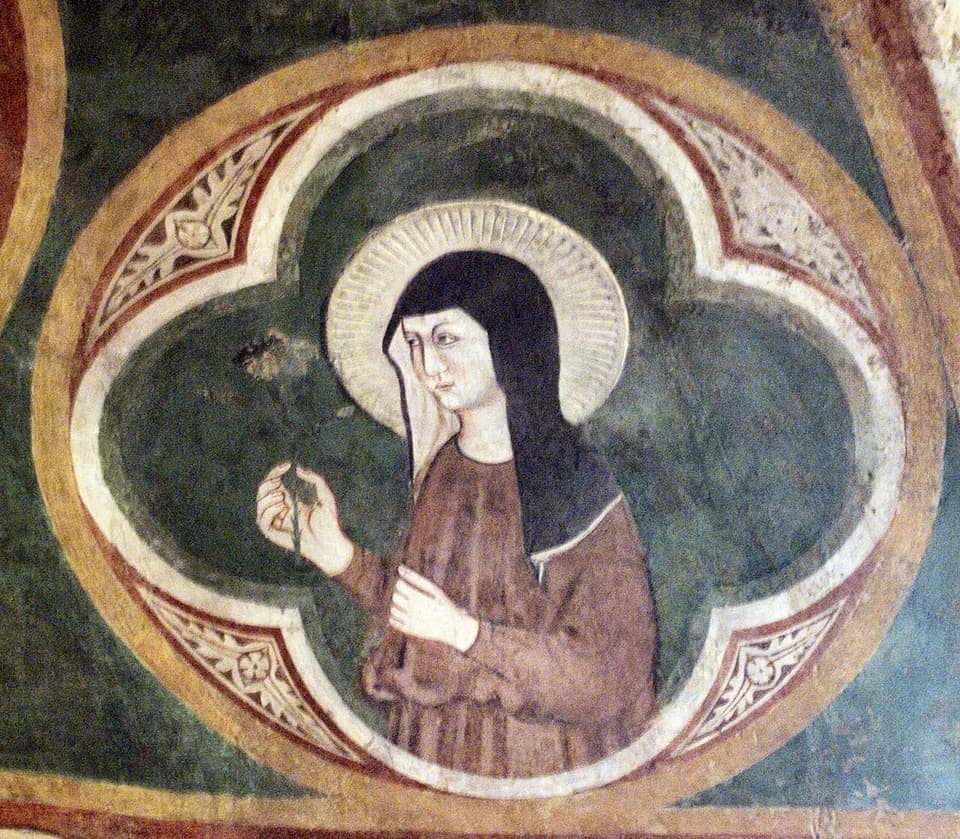
St. Clare of Assisi
Clare of Assisi founded a community of women committed to the poverty and Gospel life associated with Francis of Assisi. Born into an aristocratic family around 1193, she became a contemplative leader and spiritual writer. Her determination helped establish a distinctive Franciscan vocation for women, continued today by the Poor Clares.
Clare resisted the marriage expected of her and left her family home during Holy Week in 1211 or 1212. At the Portiuncula, Francis received her commitment and cut her hair as a sign of her new life. After a period of transition she settled at San Damiano. Her sister Agnes and other companions joined the growing community.
Their poverty was a deliberate form of common life, expressed through prayer, work, and dependence upon providence. Clare sought ecclesiastical protection for a community that would not rely on the permanent revenues customary in many monasteries. This required sustained negotiation as well as personal austerity. Her concern was that the community’s legal and economic arrangements should match its religious commitments.
Clare’s leadership also emphasized reciprocal care. Her Rule asks the sisters to preserve mutual love and peace, and her Testament connects affection with visible deeds. The monastery was therefore more than a collection of individual ascetics. Service, participation, and responsibility for one another belonged to the form of holiness she wanted the sisters to practice together.
Her letters to Agnes of Prague reveal the depth of her contemplative teaching. Meditation on Christ’s poverty, incarnation, and suffering shapes their language, along with a strong sense of loving union with him. These writings allow readers to encounter Clare’s own thought rather than knowing her only as Francis’s disciple or through later stories about her.
Papal confirmation of her Rule arrived on August 9, 1253, two days before her death. Witnesses who had lived with her contributed to the subsequent canonization process, and she was canonized in 1255. Her feast is August 11. The lasting achievement of her life includes both a religious family and a written vision of how women could live its vocation together.
This saint is included on this recurring date in the U.S. Roman Rite calendar published by the USCCB. This reading guide gives U.S. calendar saints priority; the Mass celebrated on a particular year’s date can differ because of Sundays, seasons or higher-ranking celebrations.
Explore the biography & sources ↗